
에디터. 석정화 글 & 자료. 토브 스튜디오 TOOB STUDIO + 노츠 NOTES
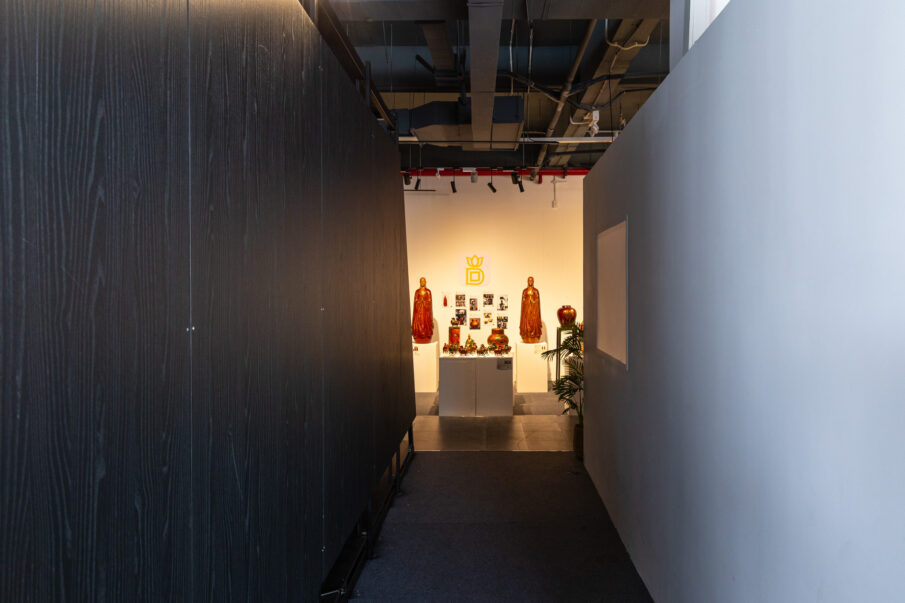
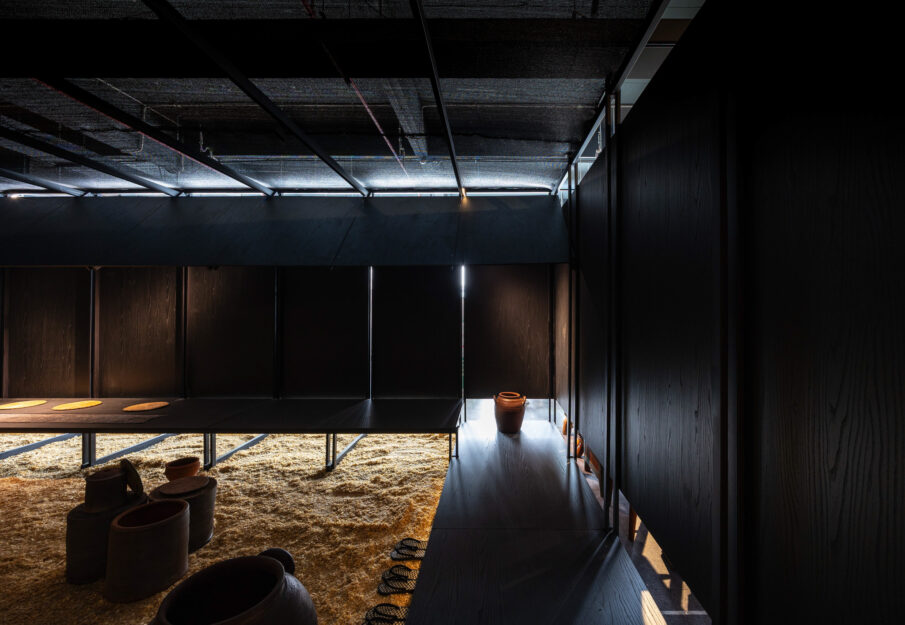
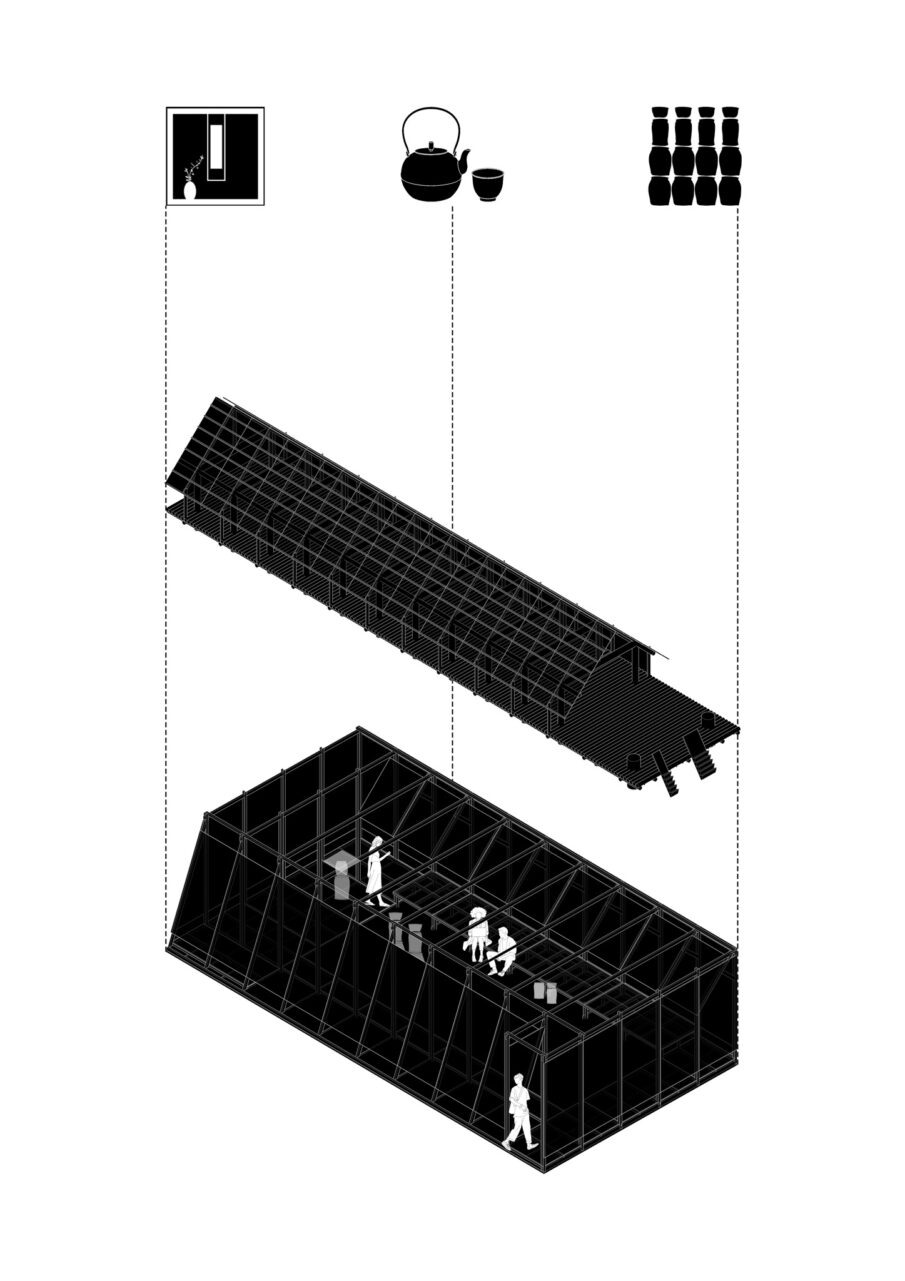
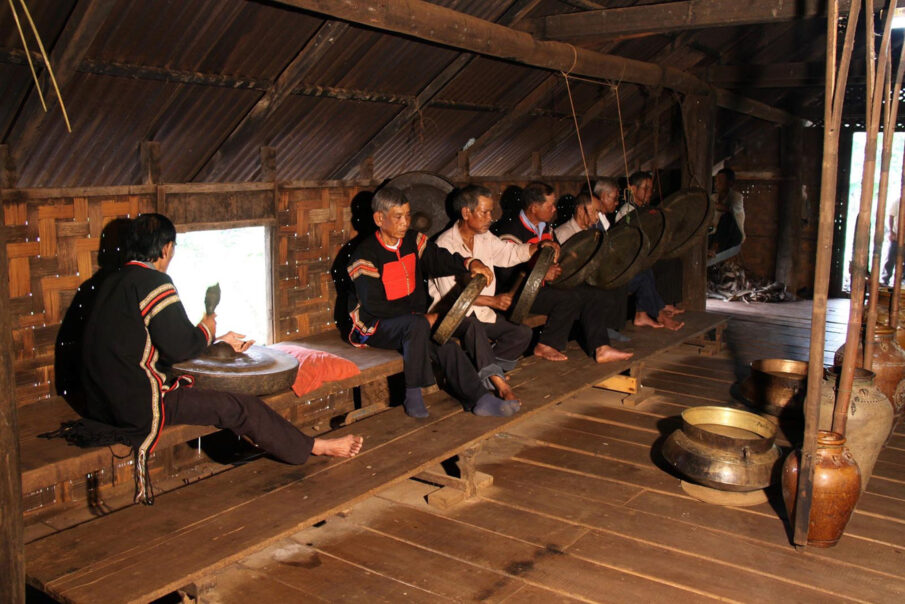
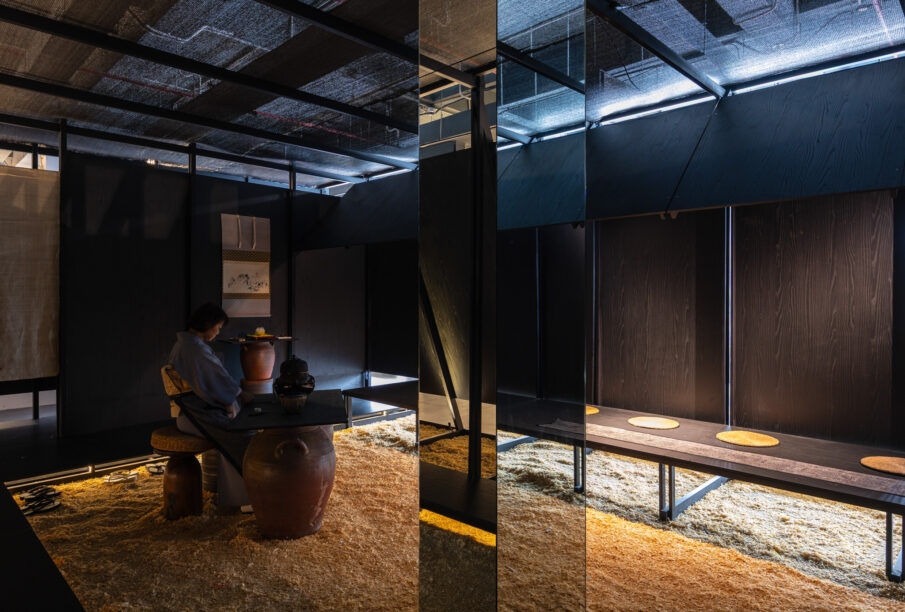
‘차시츠 & 포터리 파빌리온Chashitsu & Pottery Pavilion’은 고대 베트남 도자기 전시와 일본 다도茶道 문화 체험을 위해 조성된 70㎡ 규모의 공간으로, 베트남 소수민족인 에데족의 전통 롱하우스(장가옥)에서 영감받아 설계되었다. 롱하우스의 중심에는 ‘끄판 벤치라 불리는 신성한 가구가 자리한다. 이 벤치는 공동체의 결속을 상징하며 중요한 의식과 깊은 관련이 있고, 인간과 신의 연결을 나타내며 전통문화를 후대에 전승하기 위한 상징적 교육 도구로 기능한다.
This pavilion, a 70m² space dedicated to displaying ancient Vietnamese ceramics and practicing Japanese tea ceremony culture, is designed with inspiration drawn from the traditional longhouse of the Êđê ethnic minority in Vietnam. At the heart of this longhouse stands the prominent K’pan bench, a sacred object placed reverently in the center. The K’pan bench embodies the spirit of community unity in its creation, is intimately tied to significant rituals, represents the connection between humans and the divine, and serves as a tool for educating future generations about traditional culture.
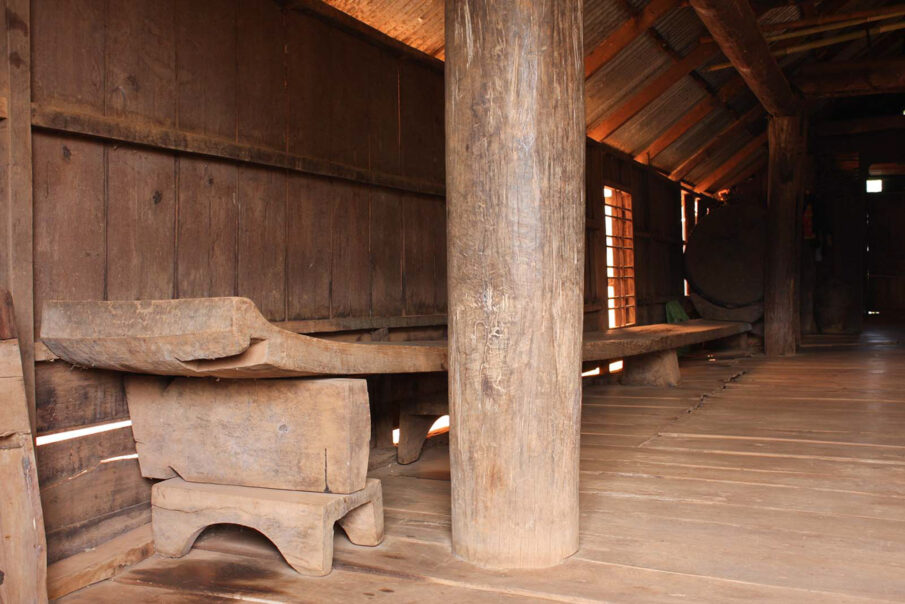
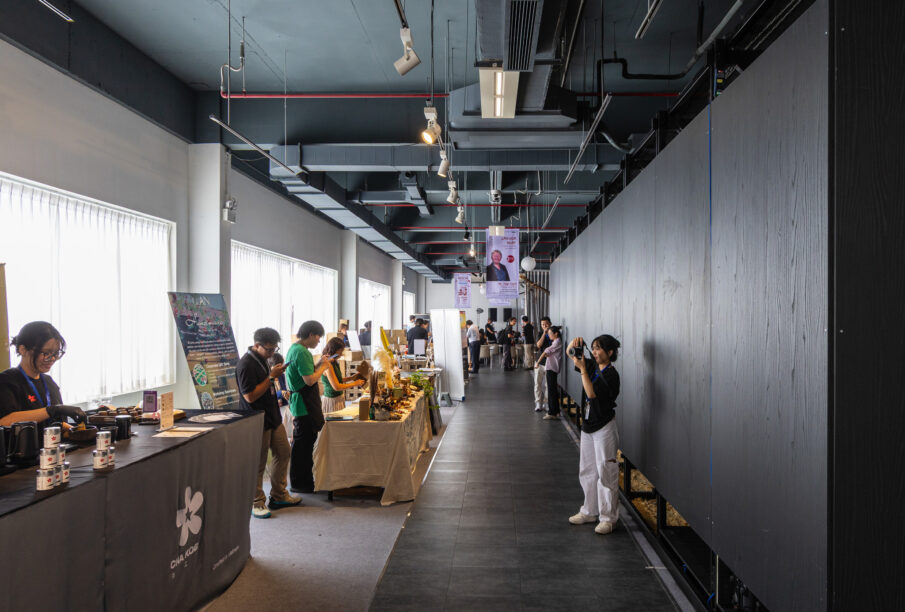
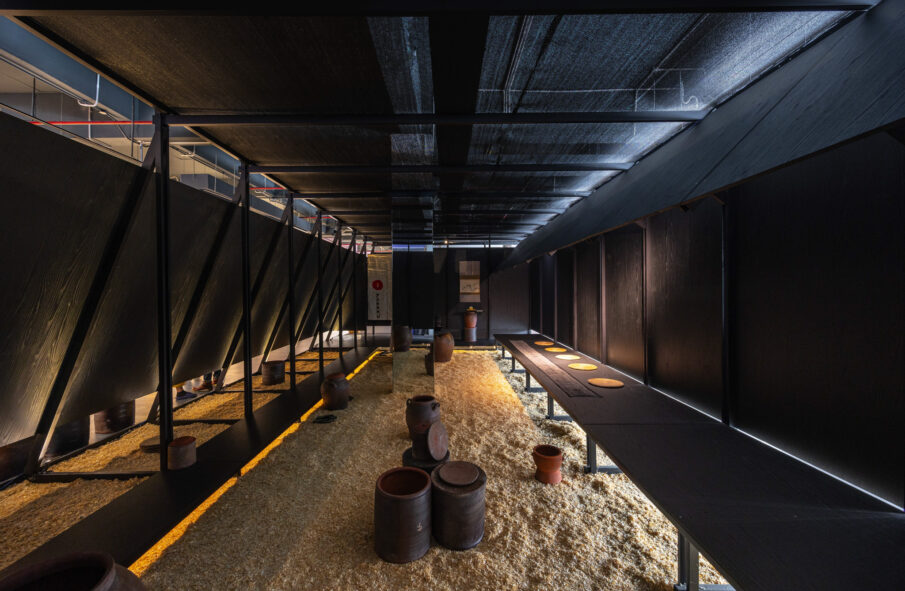
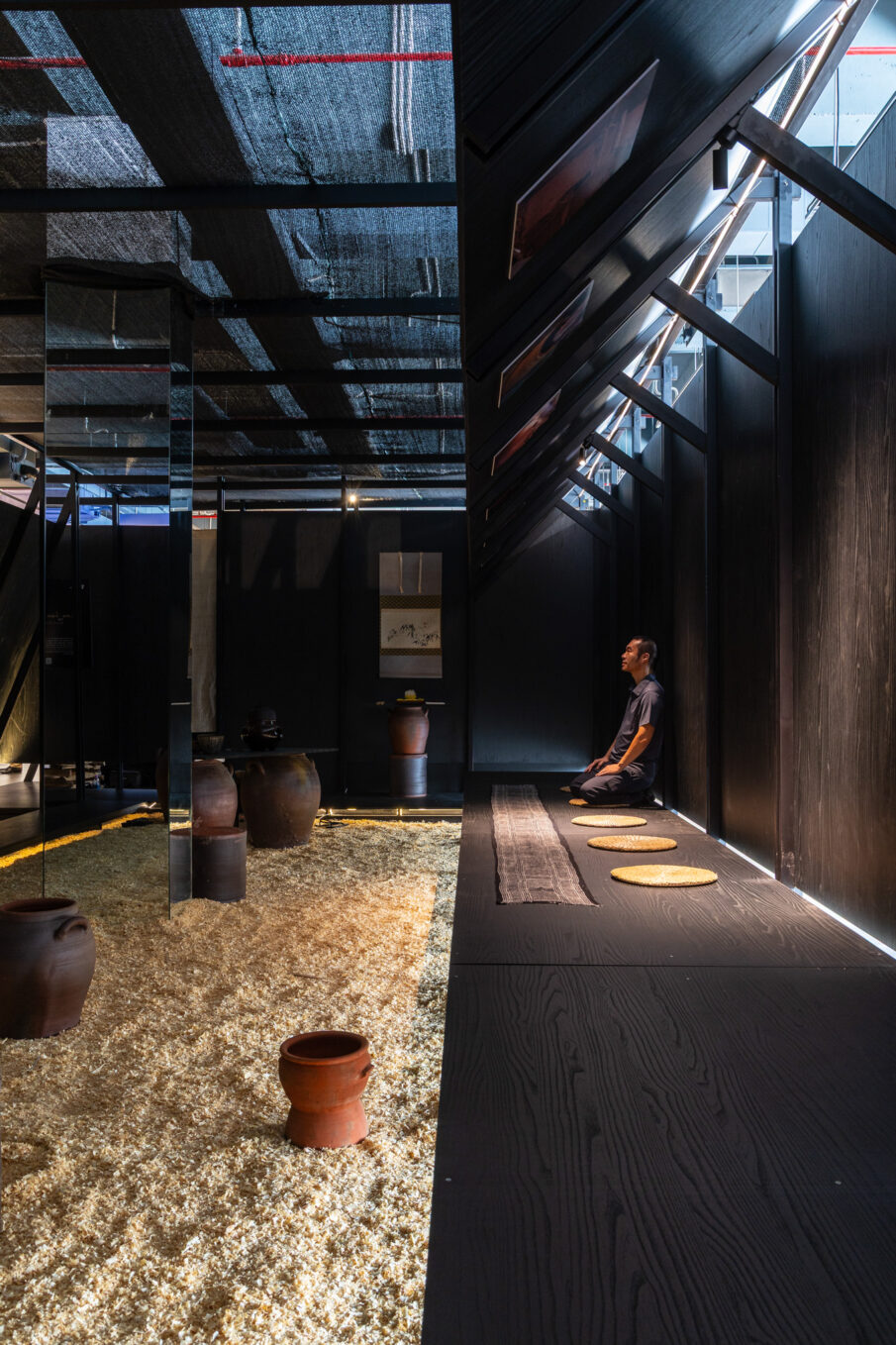
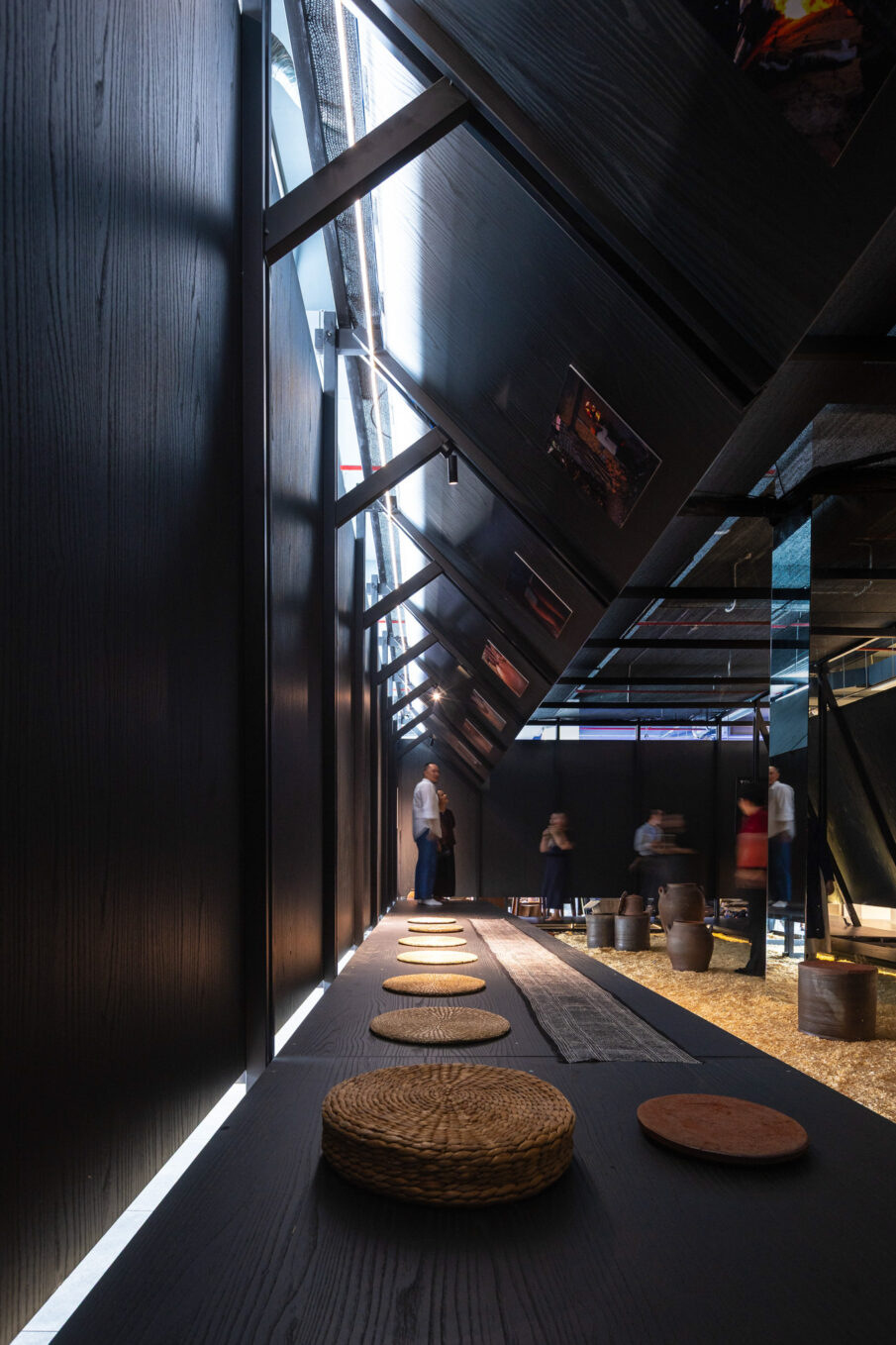
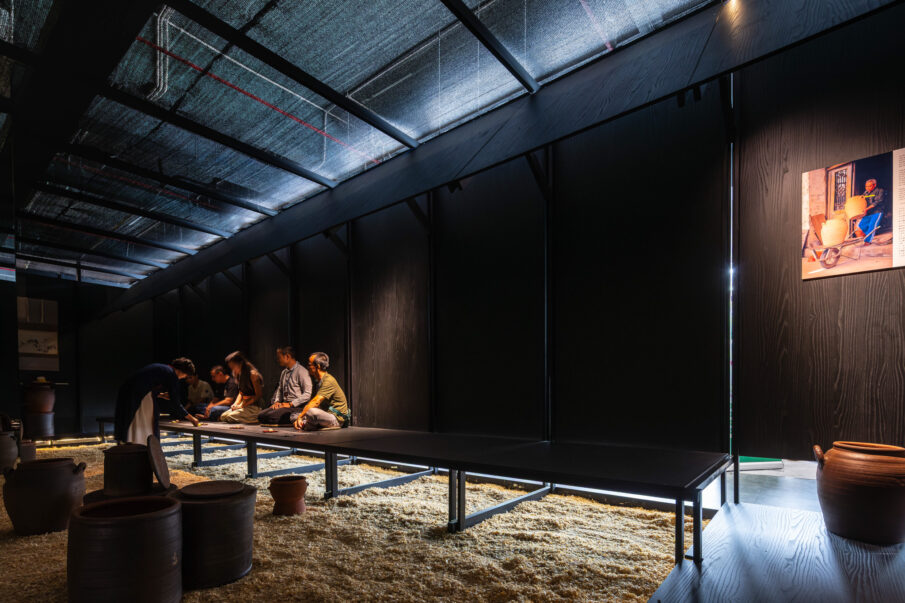
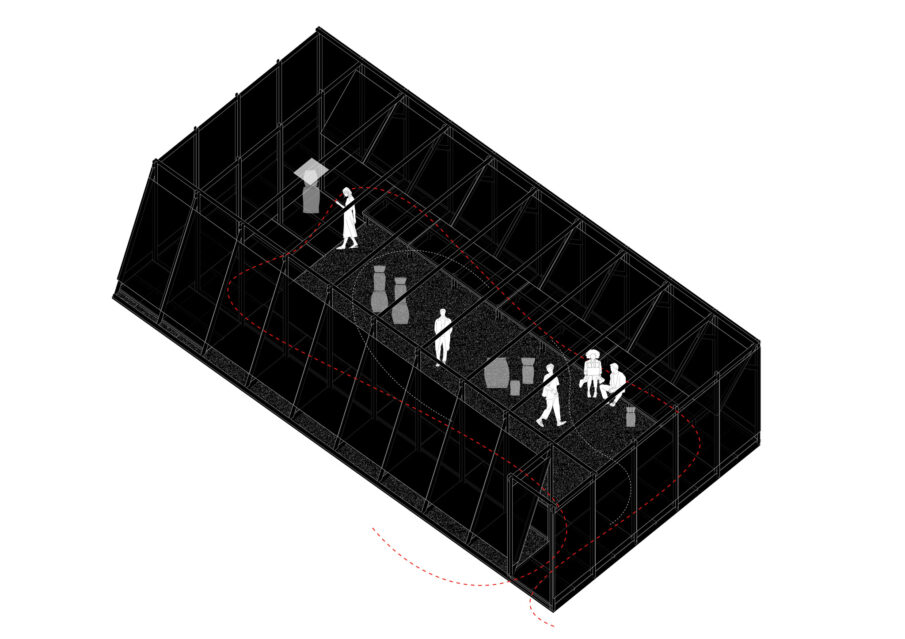
이번 전시관에서는 그러한 끄판 벤치의 정신이 ‘복도형 통로’의 형태로 구현되었다. 이 복도는 단순한 이동 동선이자 방문객들이 쉬거나 차를 즐길 수 있는 공간으로 작동한다.
In this gallery, the essence of the K’an bench is manifested through the corridor pathway, which functions both as a circulation route and as a resting or tea-enjoyment area for visitors.
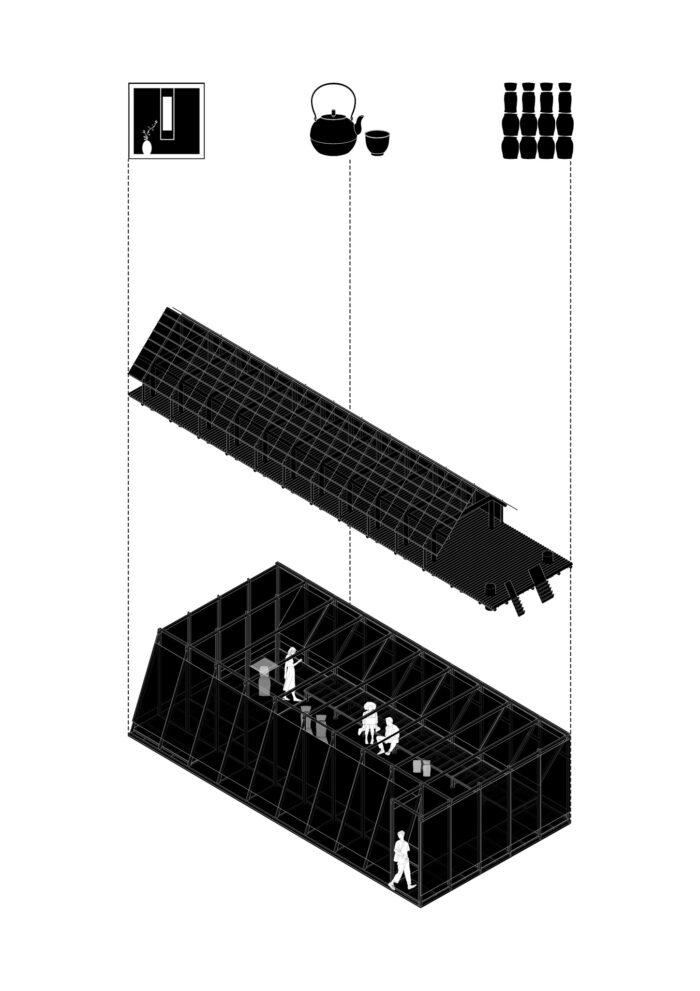
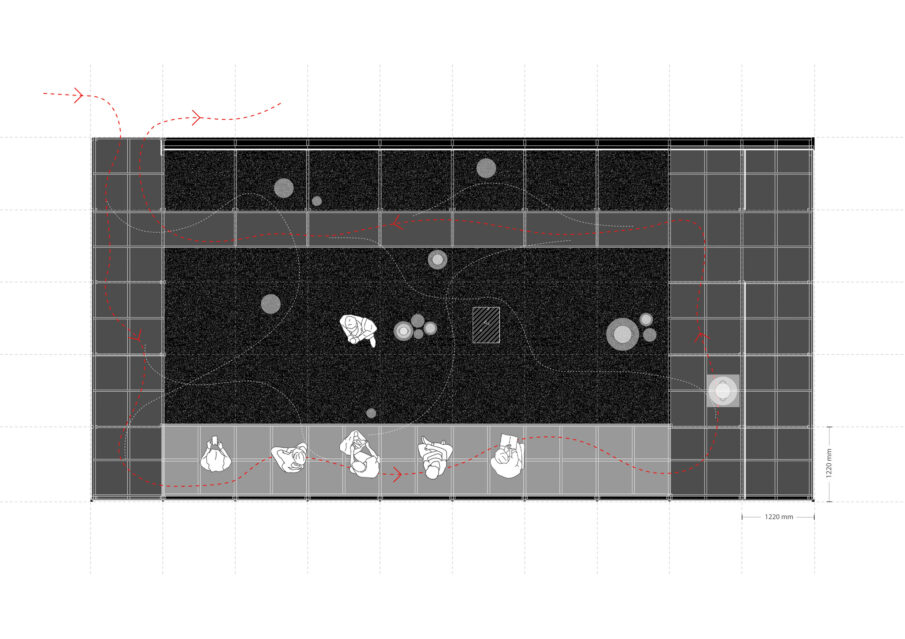
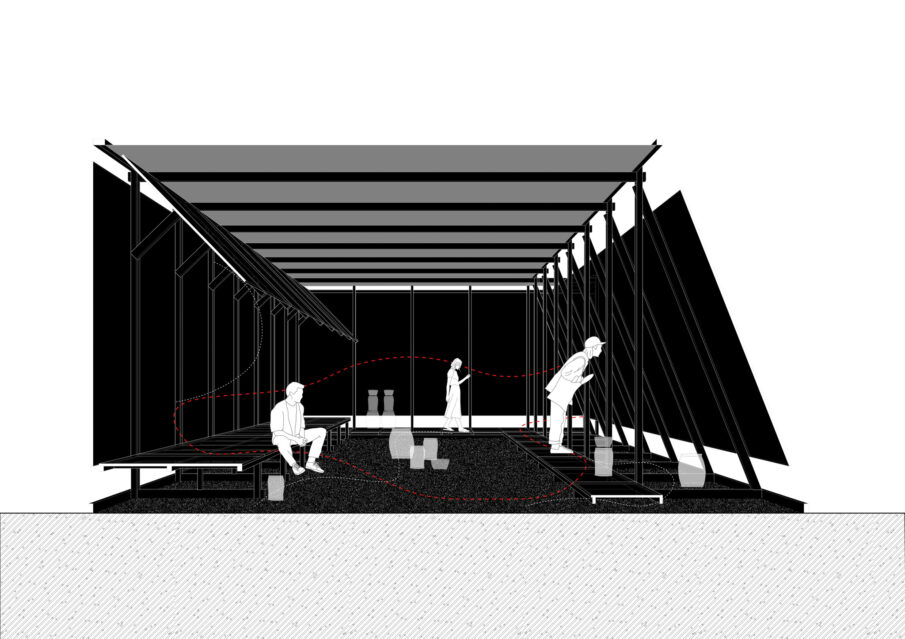
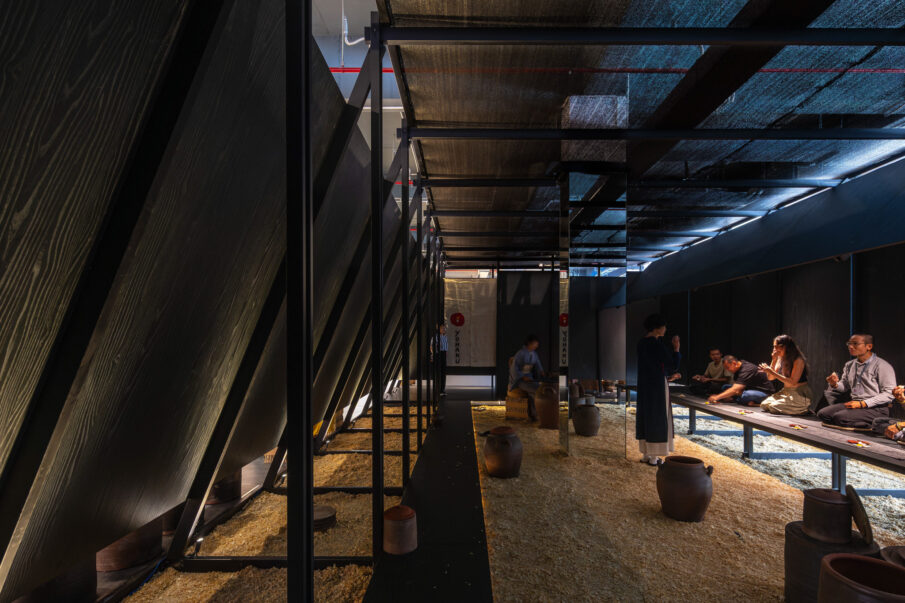
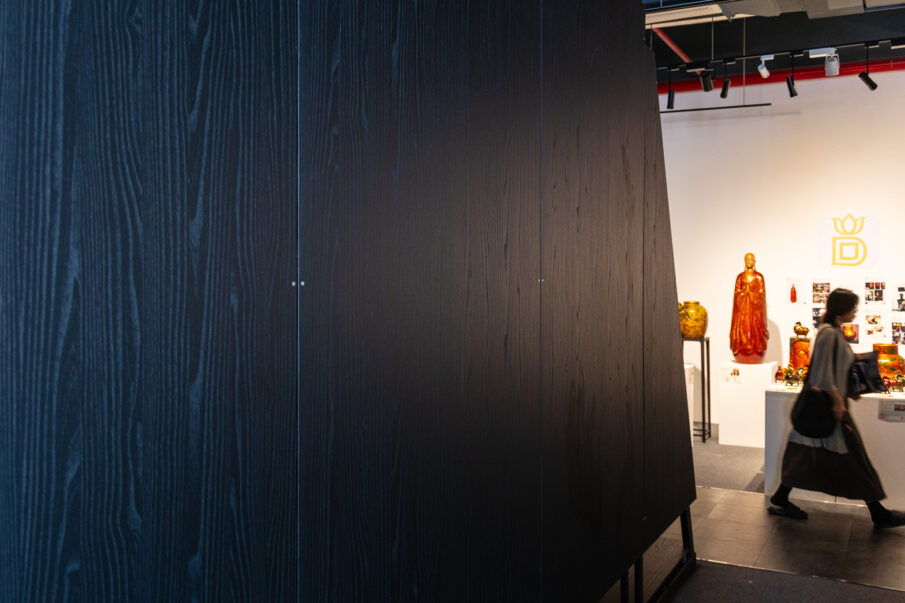
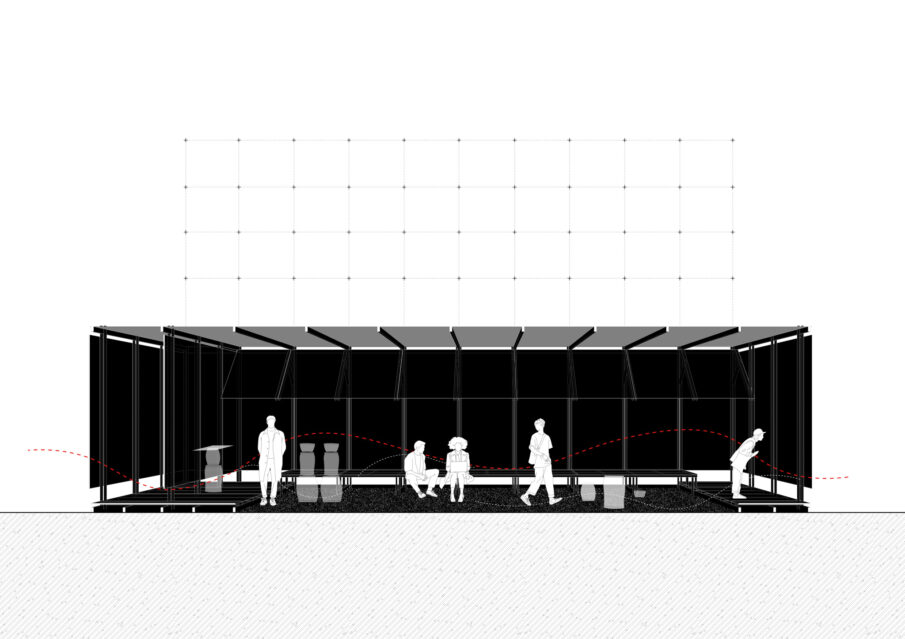
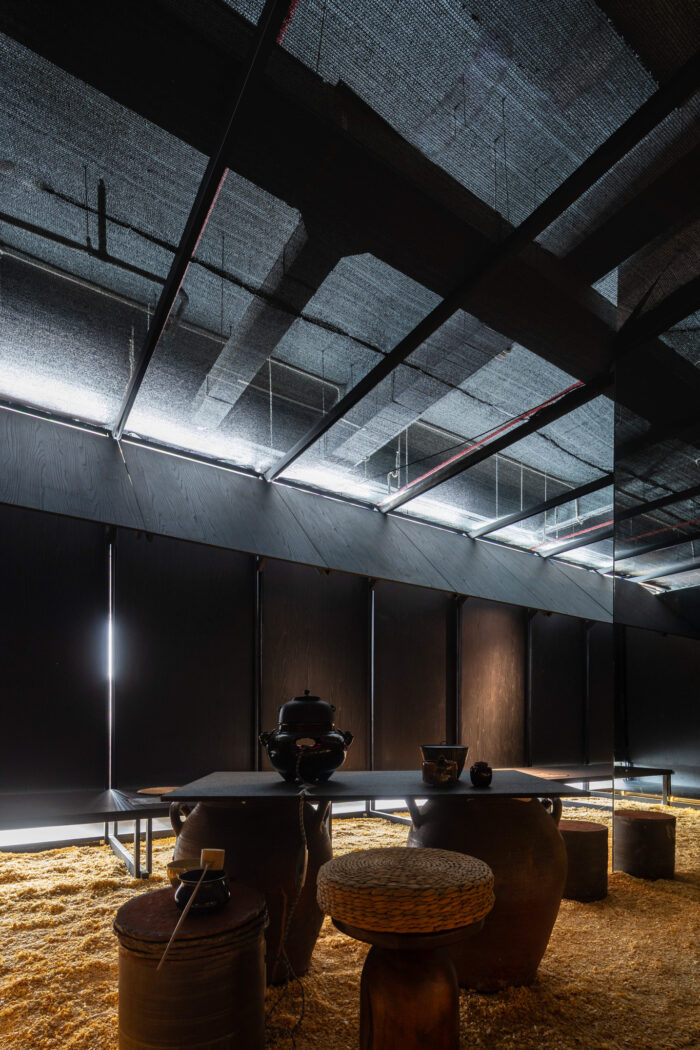
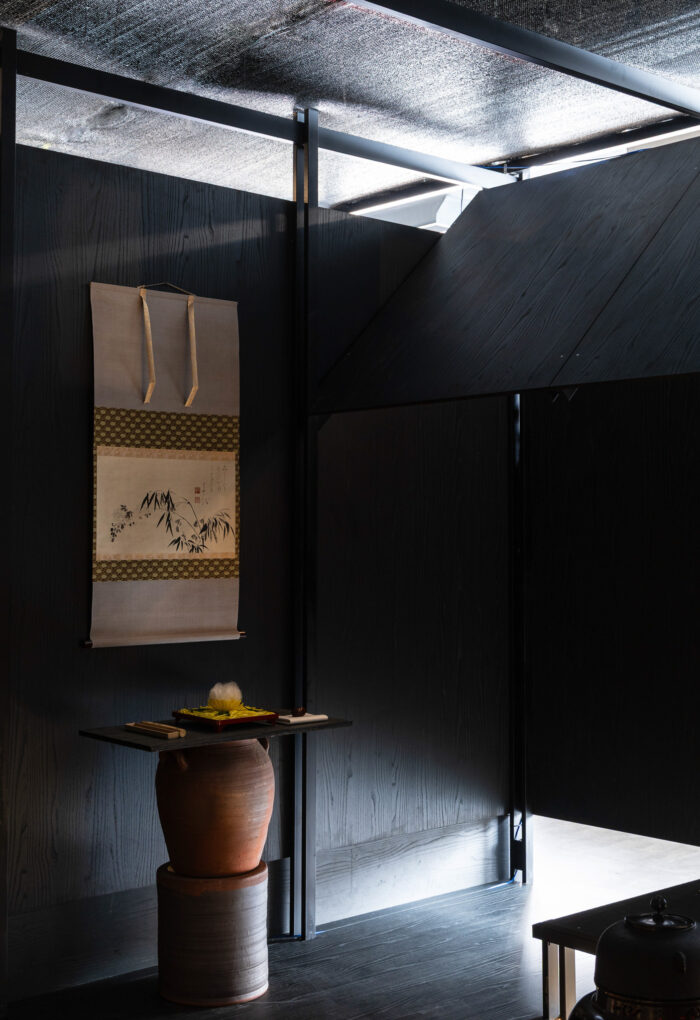
롱하우스의 외형을 넘어 실내 디자인은 간결한 스타일로 구성되어 있으며, 산업용 목재 패널을 검은색 마감 처리로 마감하였다. 상부와 하부에서 들어오는 빛의 틈은 700년 이상의 도자 제작 역사를 지닌 푸랑 마을의 가마 이미지를 모티프로 삼았다. 통로 천장 아래에는 점토가 완성된 도자기로 변해가는 과정을 담은 일련의 이미지가 매달려 있다. 방문객들은 그 아래에 앉아 고개를 들면 장인의 손끝에서 빚어지는 섬세한 기술과 예술적 과정을 감상할 수 있으며, 앞쪽의 열린 공간에 전시된 도자 작품을 직접 손으로 만져보는 경험도 할 수 있다.
Beyond the form of a longhouse, the interior is designed in a minimalist style, utilizing industrial wood panels finished with black paint, and incorporating light slits from above and below, inspired by the image of the kiln in Phù Lãng village (Bắc Ninh), an ancient village with over 700 years of handmade ceramic production serving the daily lives of Vietnamese people. Beneath the roof system of the corridor pathway hangs a series of images depicting the process of transforming a lump of clay into a finished ceramic product. Visitors seated below need only look up to easily admire the skill and craftsmanship of the artisans, while also having the opportunity to touch the ceramic works displayed in the open space ahead.
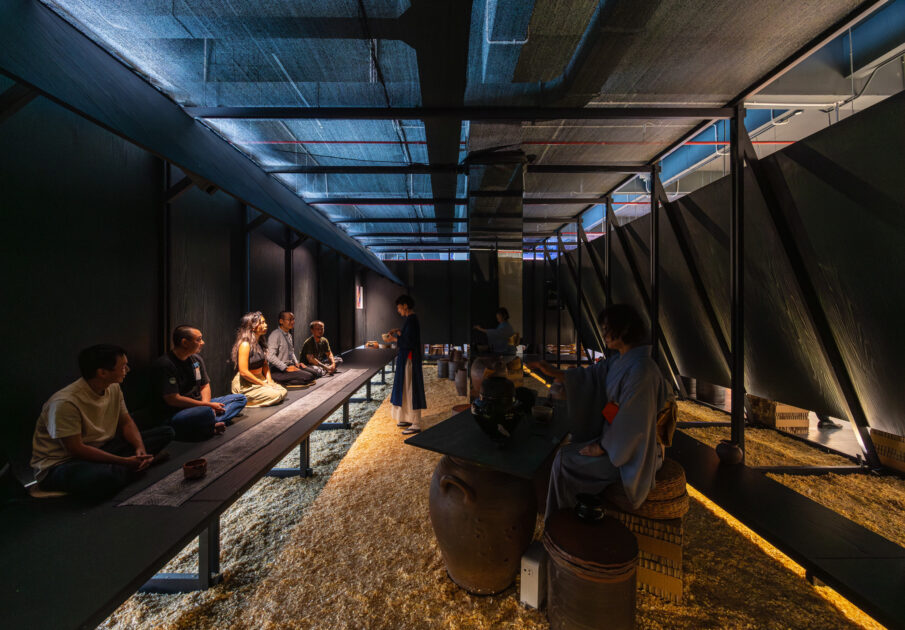
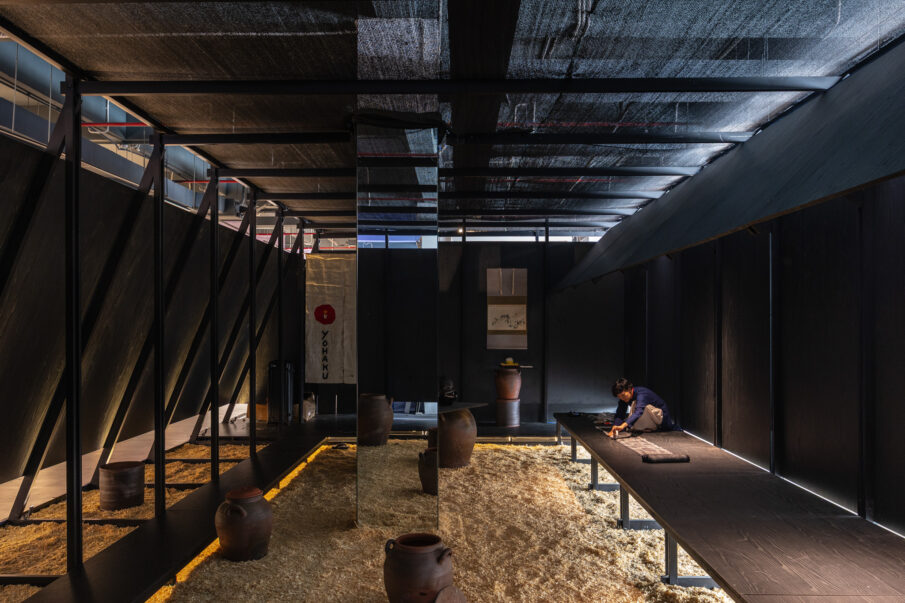
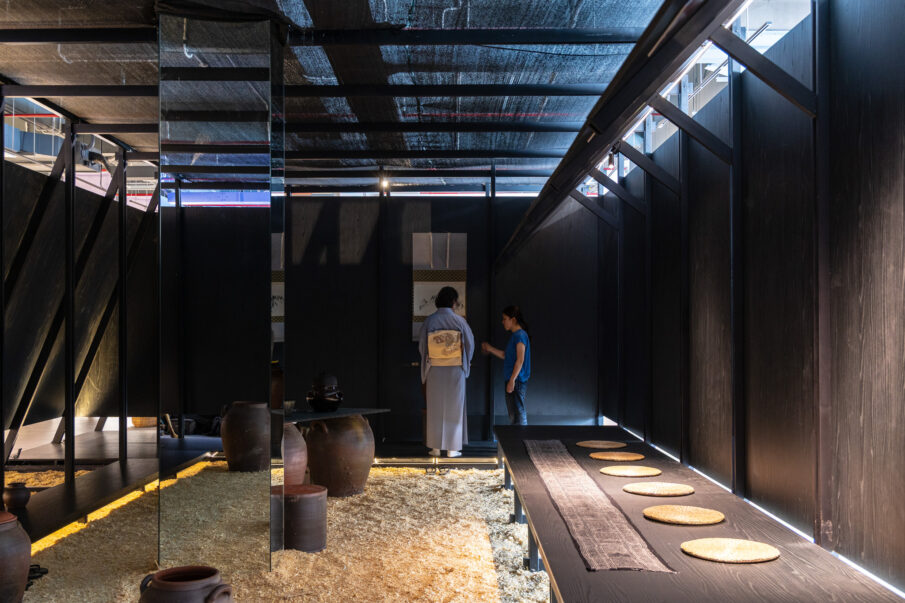
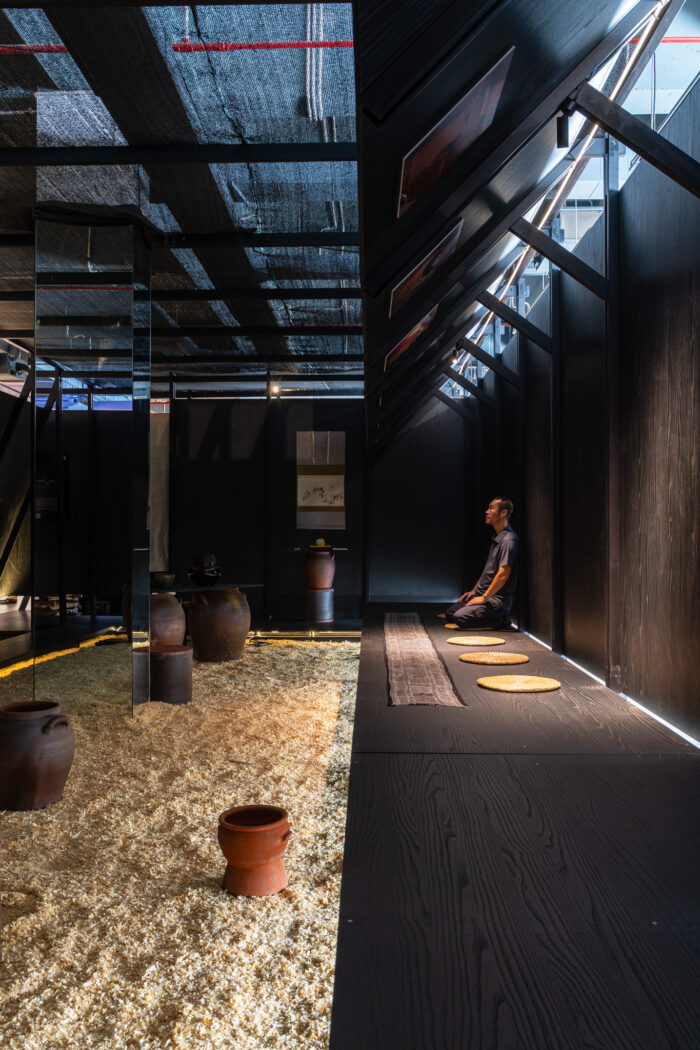
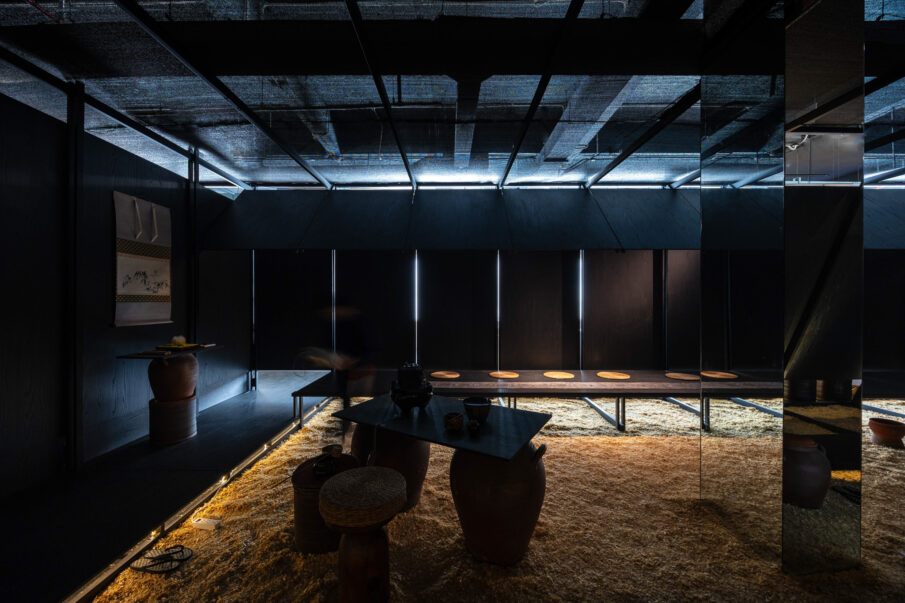
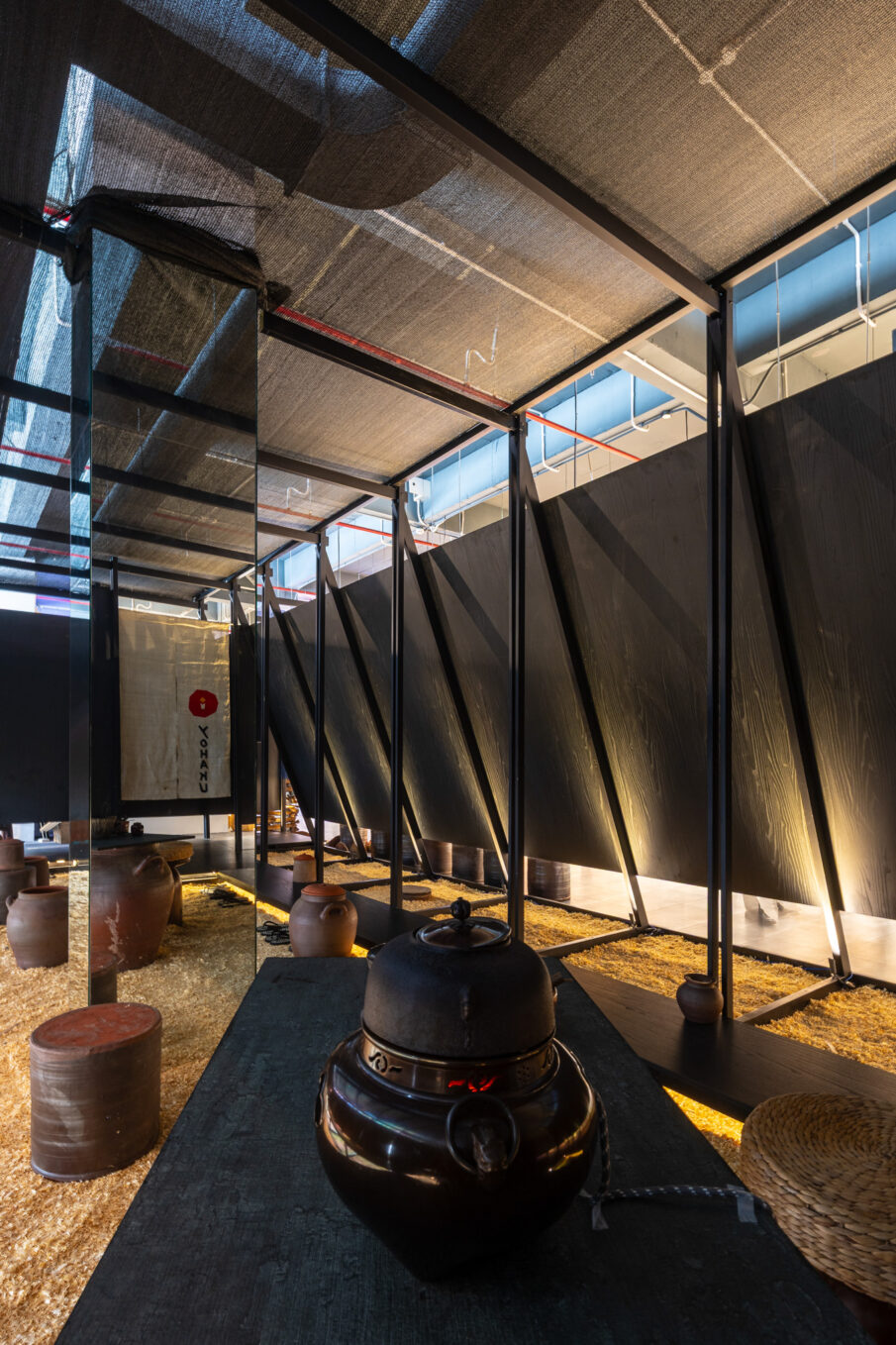
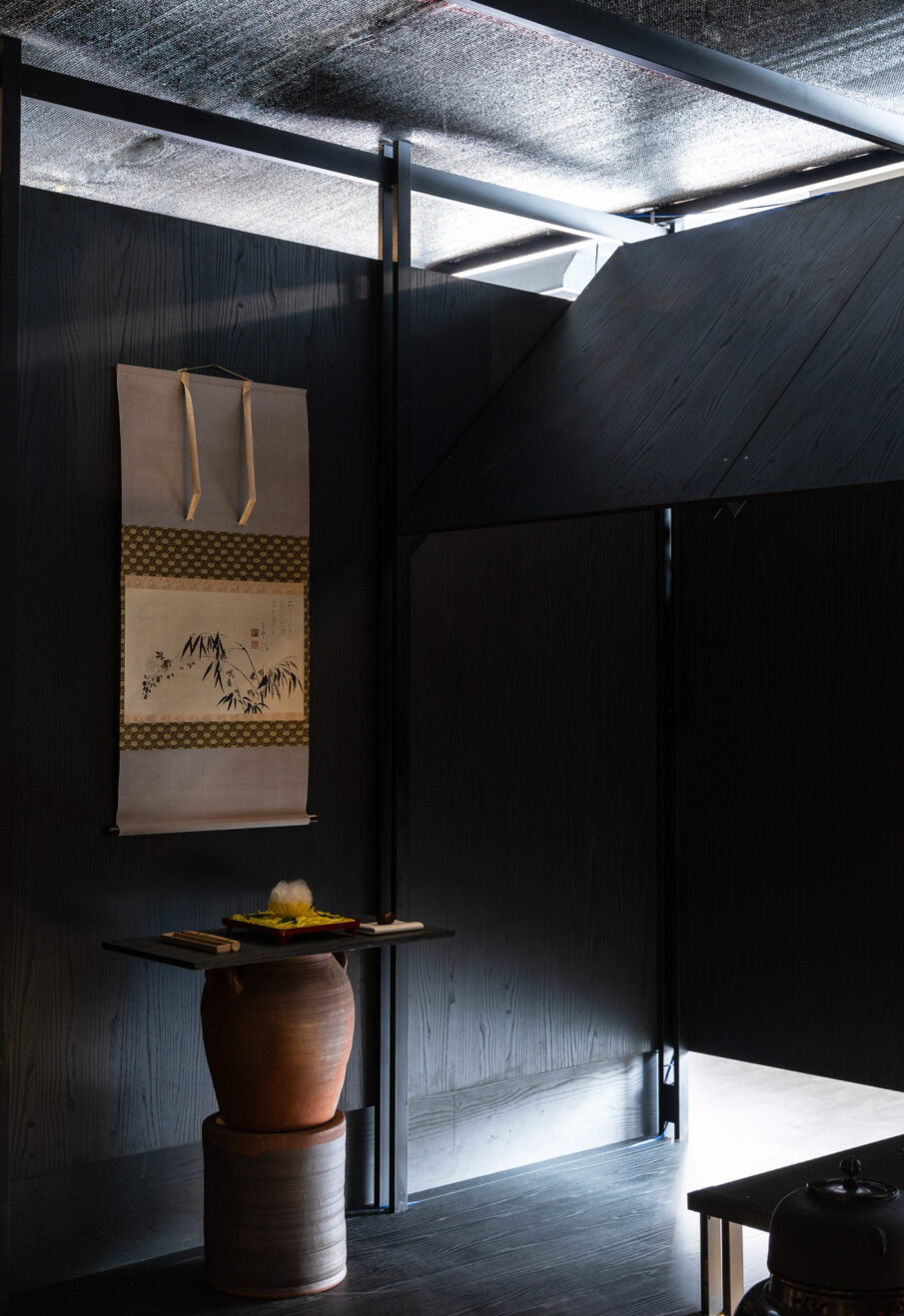
체험성과 상호작용을 높이기 위해 일본의 다도 전문가들은 베트남의 항아리와 단지를 다도 준비용 테이블, 좌석, 차 도구 진열 선반으로 새롭게 해석해 활용하였다. 이로써 일본 다도의 정신과 베트남의 도예 재료, 전통 도자 도구가 조화롭게 결합하며 양국 장인들의 시선을 통해 문화, 공예, 유산에 대한 다양한 관점을 제시하였다.
To enhance interactivity and experiential value, Japanese tea masters have ingeniously repurposed Vietnamese jars and vats into tea preparation tables, seating for tea practitioners, and shelves for displaying tea utensils in the practice of tea ceremony. This harmonious fusion of Japanese tea ceremony spirit with Vietnamese fired-earth materials and ancient ceramic tools offers diverse perspectives on culture, craftsmanship, and heritage through the lens of artisans from both nations.
오늘날 세계는 점점 더 평평해지고, 생활 방식은 편리함과 산업화된 소비 중심으로 변하고 있다. 그 과정에서 베트남의 수공 도자기 산업은 점차 쇠퇴하고 있으며, 수많은 도자기 마을뿐 아니라 다양한 전통 수공예 마을들이 사라져가고 있다.
이 파빌리온은 “전통 수공예 마을의 소멸에 무관심하지 말자”라는 메시지를 담고 있다. 이를 통해 전시와 다도 체험이라는 형식을 빌려 전통 도자기의 아름다움과 가치를 현대 관객에게 다시 연결하고자 한다. 이러한 시도는 도자기와 깊이 연결된 문화 행위로서, 일본과 베트남 모두에서 공통적으로 존재해 온 ‘차茶’라는 매개를 통한 문화적 대화의 장을 다시 여는 것이다.
As the world becomes increasingly flat, with lifestyles shifting toward convenience and industrial consumption demands ever rising, traditional Vietnamese handmade ceramics are gradually fading, leading to the decline and disappearance of numerous ceramic villages and more broadly, many other handicraft villages in Vietnam. Carrying the message “do not remain indifferent to the disappearance of traditional handicraft villages,” this pavilion aims to connect the beauty and value of traditional ceramics with contemporary audiences through exhibition formats and tea ceremony experiences – a profound cultural activity inherently linked to ceramic materials, whether in Japan or Vietnam.